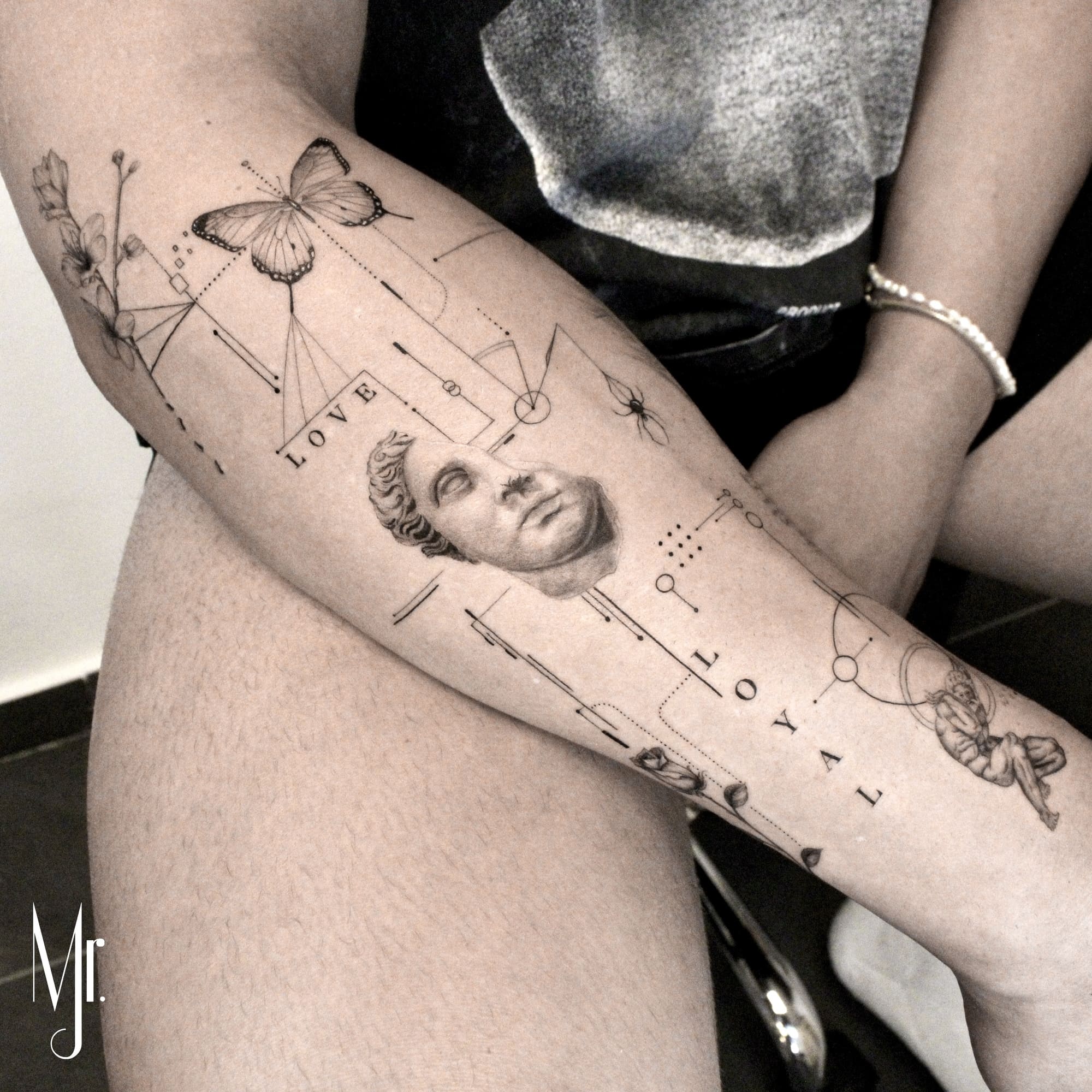
Script and lettering tattoos are among the most requested styles in the fine line discipline — and among the most technically unforgiving. A line that’s slightly off in a botanical composition often goes unnoticed. A letter that’s inconsistent or out of alignment is immediately obvious to any viewer who reads the text. This makes lettering work both a significant portfolio opportunity and a genuine technical challenge.
This guide covers the typographic principles, technique, and process considerations that separate excellent lettering tattoos from mediocre ones.
Why Lettering Demands a Different Technical Approach
Standard fine line work — botanical, portrait, geometric — has organic forms that provide some natural flexibility in execution. Letters don’t. Typography has inherent internal logic: stroke weights must be consistent across letters of the same typeface, spacing between letters must be optically even, curves must be smooth and consistent, and the overall baseline must read as level against the body’s surface.
Clients who receive script tattoos read them constantly — they, their friends, and strangers encounter the text repeatedly over a lifetime. Any technical failure — an uneven letter, a shaky line, inconsistent spacing — will be noticed every single time.
This is why lettering work demands additional preparation beyond standard fine line technique. The quality bar is set by the reader’s eye, not the artist’s.
Typeface Selection and Its Technical Implications
Different typefaces make different demands on the tattooing technique:
Serif typefaces (Times, Garamond, Georgia): The small strokes at the ends of letterforms (serifs) require precise execution at tiny scales. At text tattoo sizes (often 8–14pt equivalent on skin), serifs must be clean and consistent across all characters. Any inconsistency in serif size or angle is immediately visible.
Script and calligraphic typefaces: Flowing, connected letterforms that simulate handwriting. The transitions between letters must be smooth and continuous — a broken connection or an angular transition in a script typeface looks like a technical error. Curved strokes in script must maintain consistent weight and curvature throughout.
Sans-serif typefaces (Helvetica, Futura): Clean, unadorned letterforms that rely entirely on stroke weight consistency for their quality. A slight variation in stroke weight between letters in a sans-serif word is highly visible. These can be technically easier than serif work for the absence of small end details, but they demand machine consistency.
Custom or hand-drawn lettering: Many clients want personalised lettering that doesn’t match any specific typeface. Custom lettering gives you creative flexibility but requires strong typographic knowledge to ensure the result reads coherently and professionally.
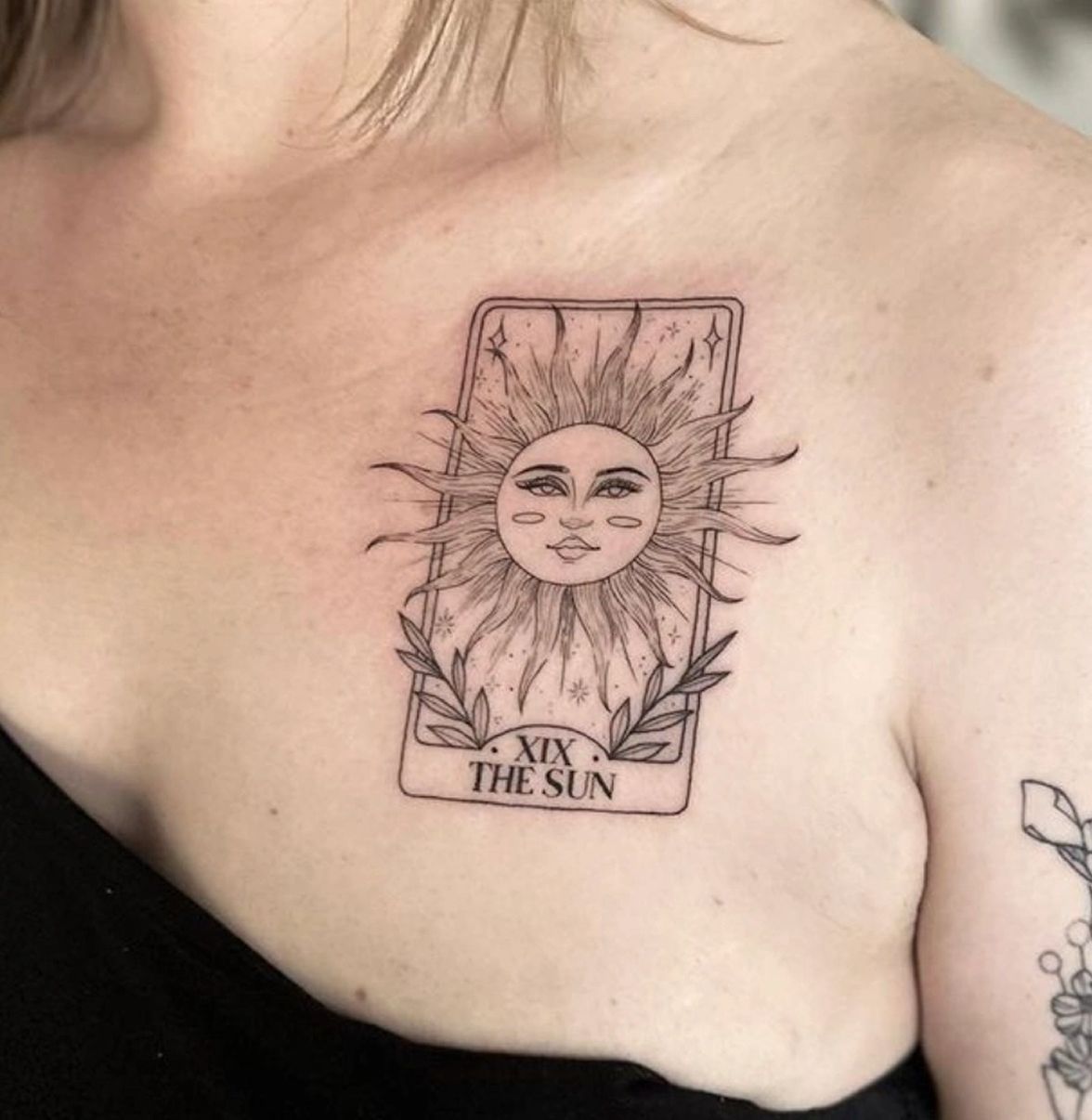
Stencil Precision: The Foundation of Quality Script
More than almost any other tattoo style, lettering quality is determined before the needle touches skin. Your stencil is everything.
Create your lettering stencil digitally — set the text at the intended size, in the chosen typeface, with the correct spacing. Print at scale. Check carefully:
• Are all letters at consistent scale? • Is the spacing between letters optically even (optical spacing and mathematical spacing are different — adjust by eye)? • Are any letters touching or overlapping where they shouldn’t? • Does the overall word or phrase read as a single unit with appropriate internal rhythm?
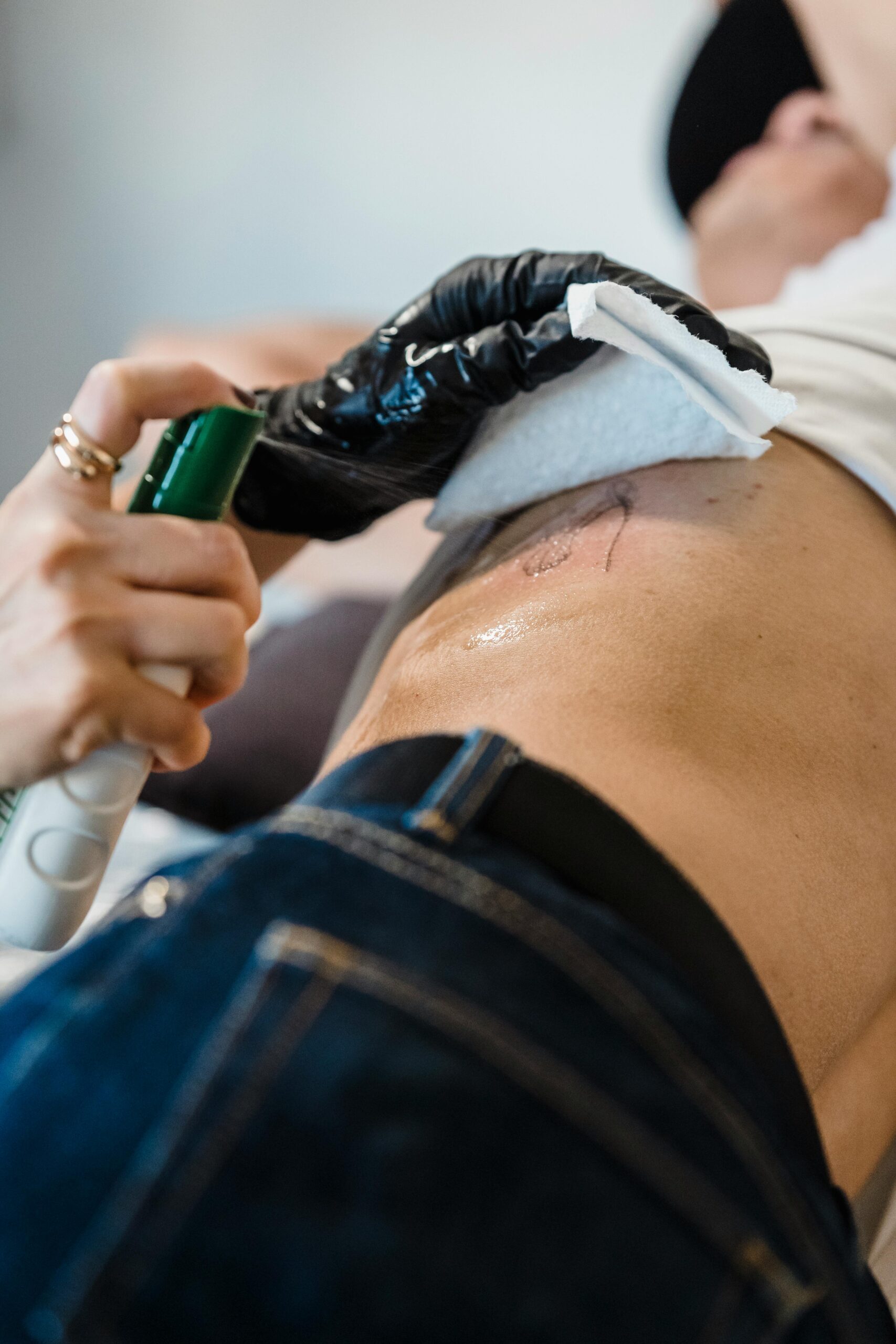
Apply the stencil to the body surface and assess from a normal viewing distance. Check that the baseline reads as level (on body surfaces that curve, this requires careful placement — slightly uphill placement on paper can read as level on the arm). Adjust before beginning.
A lettering stencil that looks excellent before you start gives you the best possible foundation. A mediocre stencil cannot be rescued by excellent technique.
Machine Settings and Technique for Lettering Work
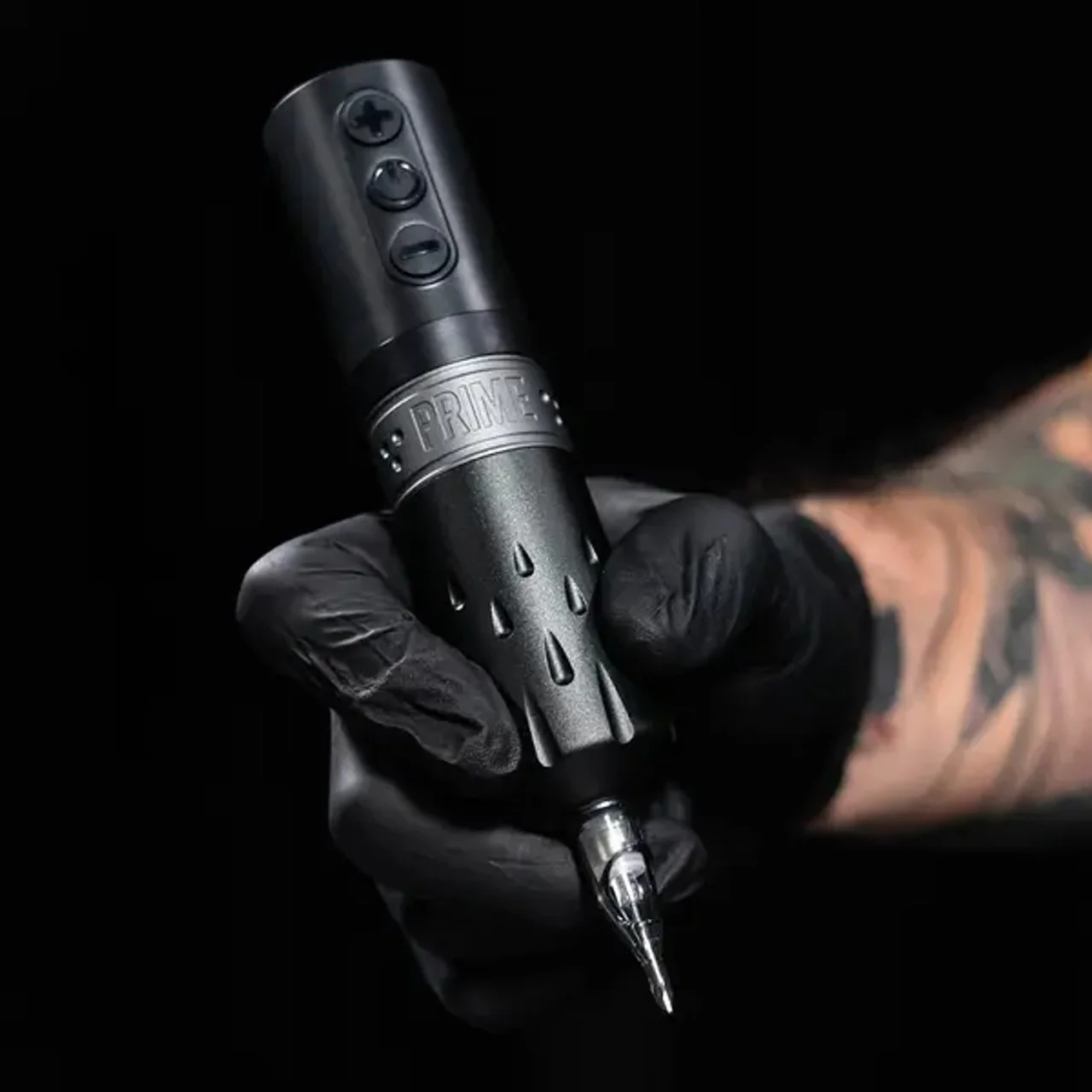
Needle selection: For most script and lettering work at common text sizes, a 3RL provides a clean, controlled line with slightly more consistency than single needle. For very fine detail work — small serif details, hairlines in calligraphy — a 1RL or single needle may be required. Use the lightest needle configuration that reliably produces clean lines at your current skill level.
Voltage: Lower voltage (5.5–7V typically) for lettering — you need control and precision, not speed. Machine settings that cause excessive vibration in the hand are counterproductive for the steady, controlled strokes that lettering demands.
Pull strokes vs push strokes: Most tattooing is executed with pull strokes — the needle moving toward the artist’s body. For lettering, some curved letterforms require pushing the needle away, particularly in the curved portions of letters like ‘O’, ‘C’, and ‘G’. Push strokes require additional control and should be practised extensively on synthetic skin before using on a client.
Working sequence within words: Work from left to right within each word to minimise the risk of smearing stencil ink into working areas. Complete each letter before moving to the next, maintaining consistent speed and pressure throughout.
Placement Considerations for Script Tattoos
Where the script is placed significantly affects technical requirements and longevity:
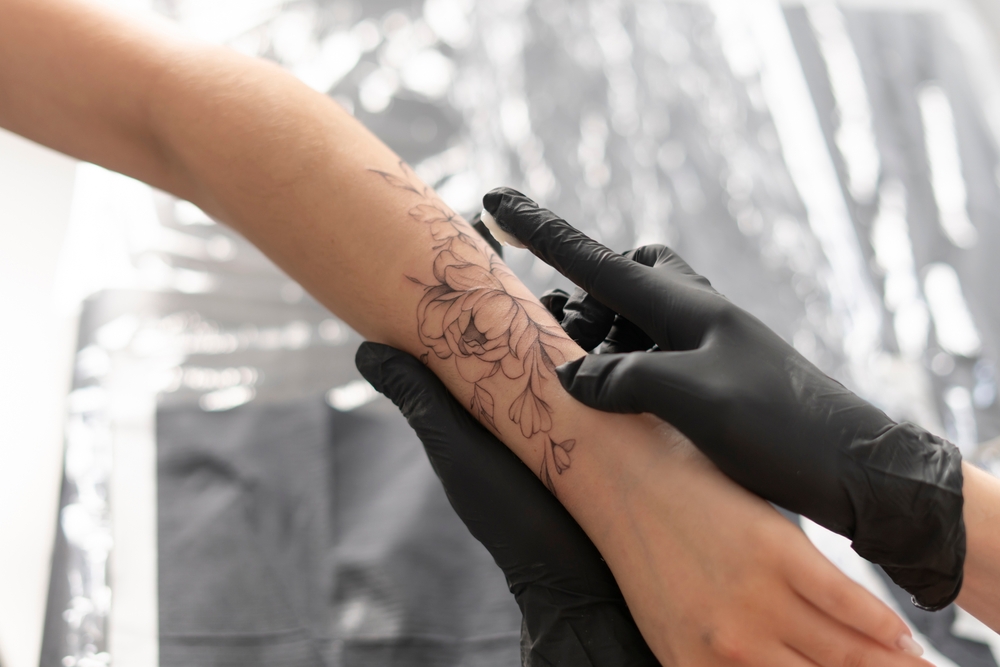
Forearm (inner): One of the most natural locations for readable text — clients and viewers can read it easily, the surface is relatively flat, and the skin ages well here. The baseline naturally follows the arm’s line in most orientations.
Ribcage: Technically challenging because the surface curves significantly and moves with breathing. Long phrases here require careful stencil mapping across the curved surface. Generally suits shorter text.
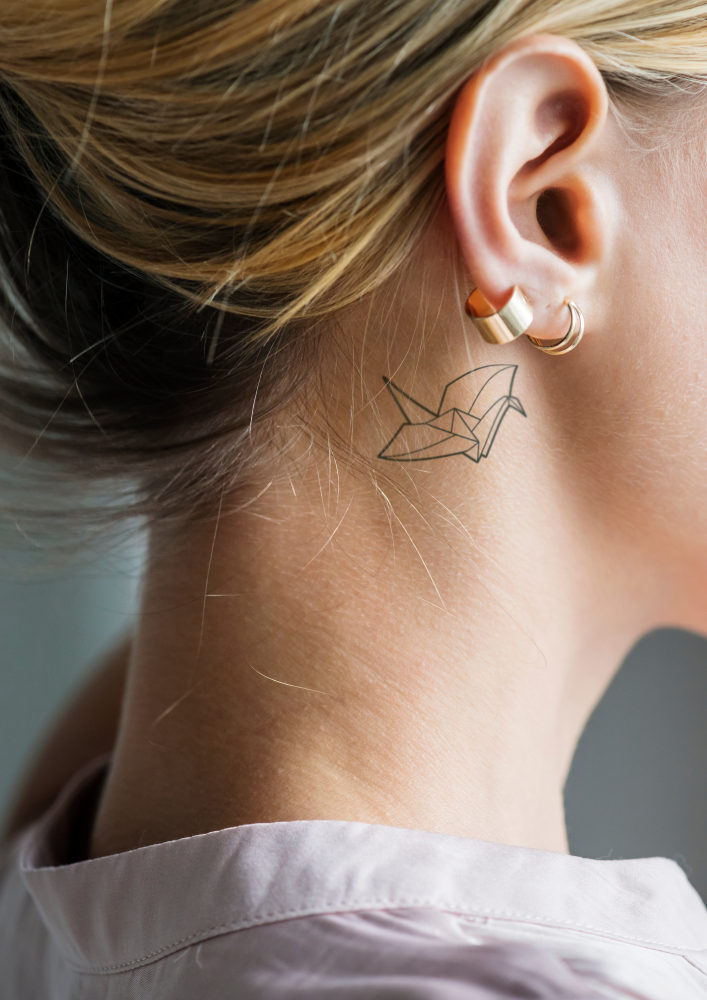
Behind the ear / back of neck: Small-scale text in these locations requires precise technique and careful placement. Skin here is thin, proximity to the ear cartilage requires extra care, and the location is hard for clients to assess post-session.
Fingers: The highest risk placement for lettering. Finger skin has very high turnover and ink retention is notoriously poor, particularly in the skin folds over knuckles. Clients must be informed clearly that finger text tattoos typically require touch-ups and age less predictably than other placements.