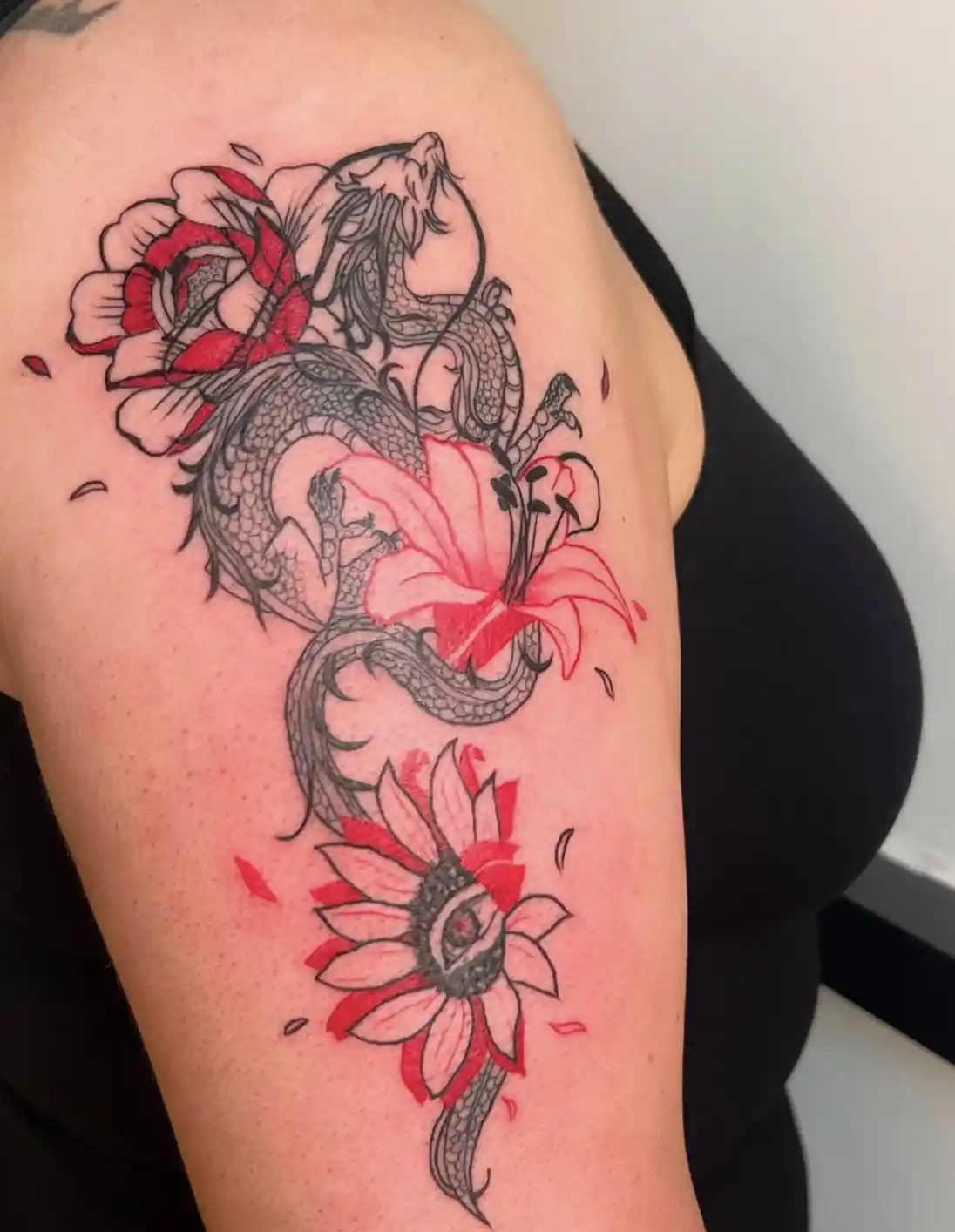
Fine line botanical tattooing has become one of the most consistent booking drivers in Australian studios. From delicate single stems to elaborate wrapped compositions, floral work in fine line style represents a perfect intersection of artistry and technique — elegant enough to attract aesthetics-focused clients, technically demanding enough to command premium rates.
If you’re building a fine line specialisation, understanding botanical design principles and the technique required to execute them well is essential. Here’s a thorough guide to both.
Why Botanical Fine Line Is Such a Strong Specialisation
Flowers and botanicals suit fine line tattooing particularly well for a number of reasons. Their organic forms — irregular, asymmetric, naturally flowing — are forgiving of minor technical imperfections in ways that strict geometric or architectural designs aren’t. A slightly uneven line in a botanical composition reads as organic character; the same imperfection in a geometric design reads as an error.
At the same time, botanical subjects are rich in detail and variation. Petals with subtle texture, leaves with visible veining, stems with thorns or nodes — there is always more to work with as your skill develops, and clients return for additions that extend and elaborate the initial piece.
The subject also has enormous range: minimalist single stem studies, maximalist sleeves, negative space compositions, blackwork botanicals, micro-realism florals — all fall within the broad category of botanical fine line and appeal to different client aesthetics.
Core Design Principles for Fine Line Botanical Work
Flow and composition: The most important design element in botanical tattooing is directional flow. A well-composed botanical piece moves the eye through the design in a way that feels natural — stems curve, leaves fan outward, petals open in a plausible direction. This sense of directed growth is what separates botanical compositions that look like specimens from those that look like living plants.
Negative space: Fine line botanical work relies on strategic negative space. The skin between elements is as much a design choice as the inked lines themselves. Compositions that are too dense — where every gap is filled — lose the delicacy that defines the style. Allowing breathing room around petals, stems, and leaf clusters creates the light, fresh quality that clients are seeking.
Scale variation: Strong botanical compositions mix scale — a large hero flower surrounded by smaller supporting elements, fine texture details contrasted with broad negative space. This variation creates visual interest and guides the eye.
Placement-aware design: Botanical tattoos are placement-sensitive. A design for the inner forearm should follow the arm’s natural directional orientation. Ribcage pieces should flow with the natural curves of the body. Ankle pieces should wrap gracefully. Designing in a vacuum without considering the body part is a common beginner error — always sketch in context.
Technical Execution: Approach for Fine Line Florals
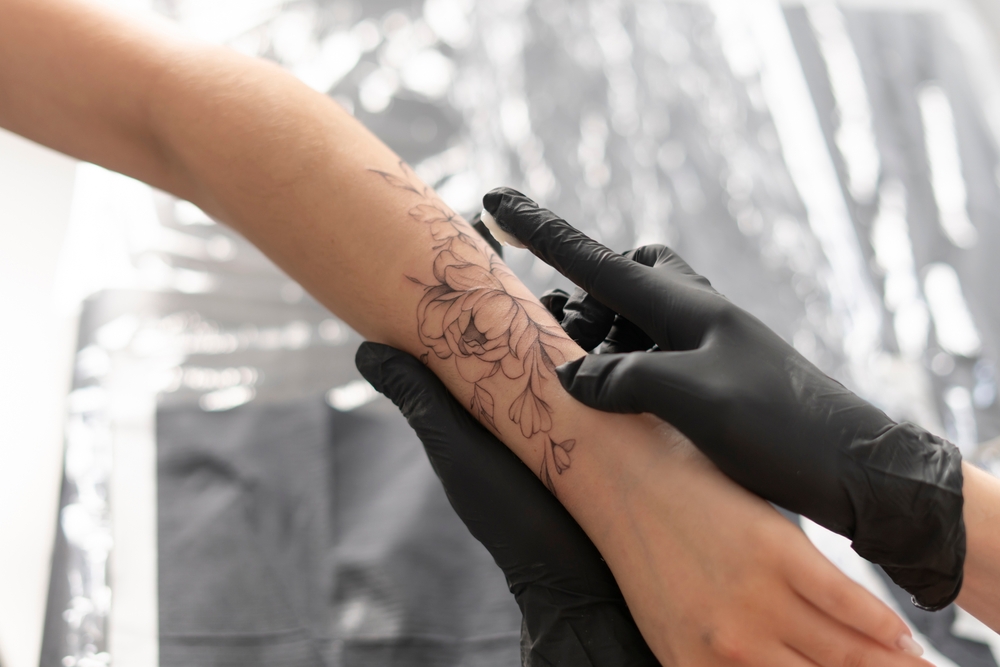
Line weight hierarchy: In botanical work, not all lines are equal. Major structural lines — main stems, large petal outlines — should have slightly more weight than secondary lines (leaf veins, small detail elements). This hierarchy creates depth: the viewer’s eye reads heavier lines first, then explores the detail. A 3RL works well for primary lines; a 1RL or tight single needle for fine detail.
Leaf veining: Vein work in leaves is one of the most technically revealing elements of a botanical tattoo. Veins should taper toward the leaf edge, becoming progressively finer as they approach the tip. Using single needle or 3RL, the stroke direction should follow the vein’s natural branching pattern — from the central midrib outward to the margins.
Petal texture and shading: Fine line florals can be purely linear (outline-only) or incorporate subtle shading to suggest petal depth and translucency. A light curved magnum wash through the shadowed areas of petals adds dimension without compromising the minimalist quality of the style. Work subtly — heavy shading in a fine line composition overwhelms the delicate line work.
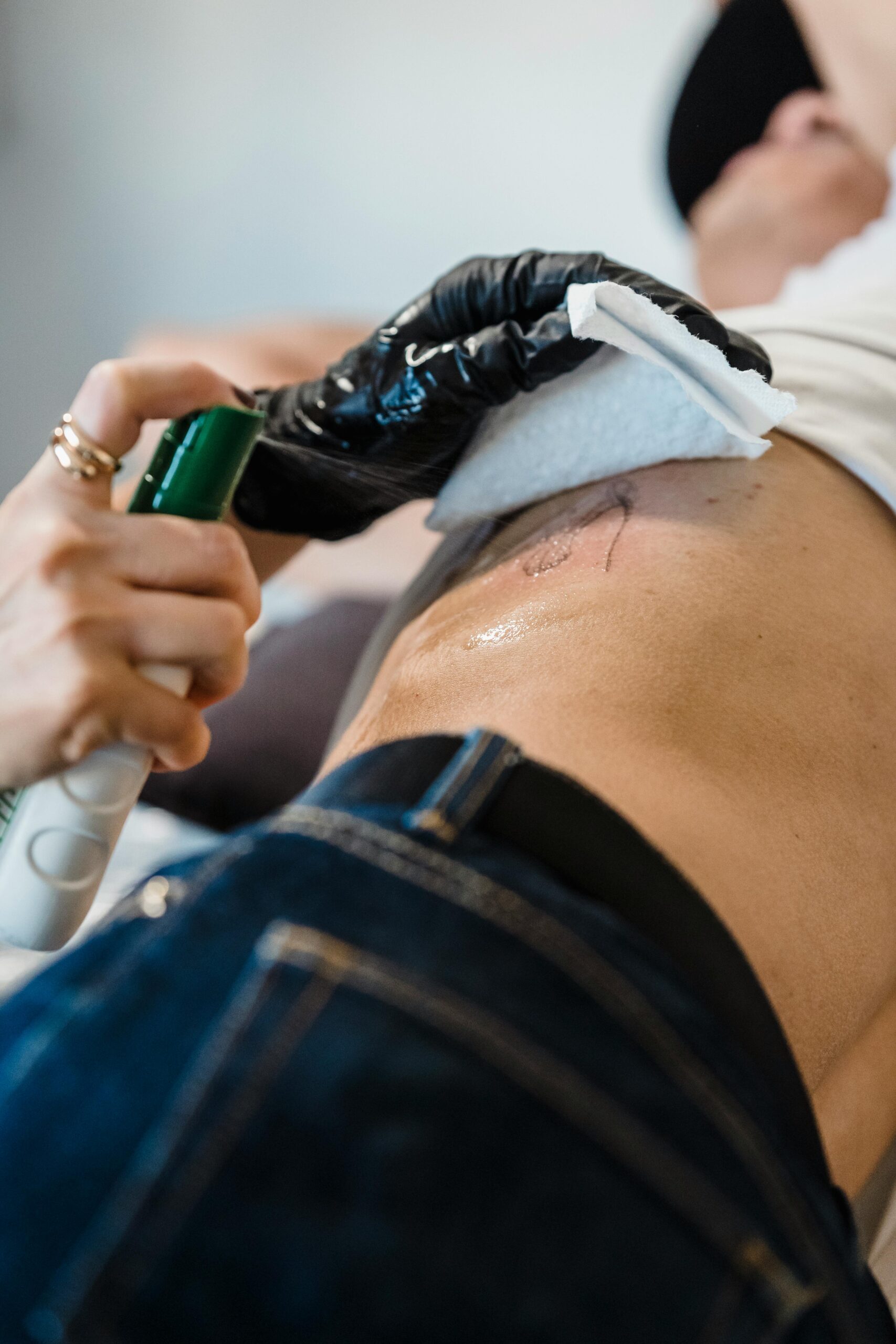
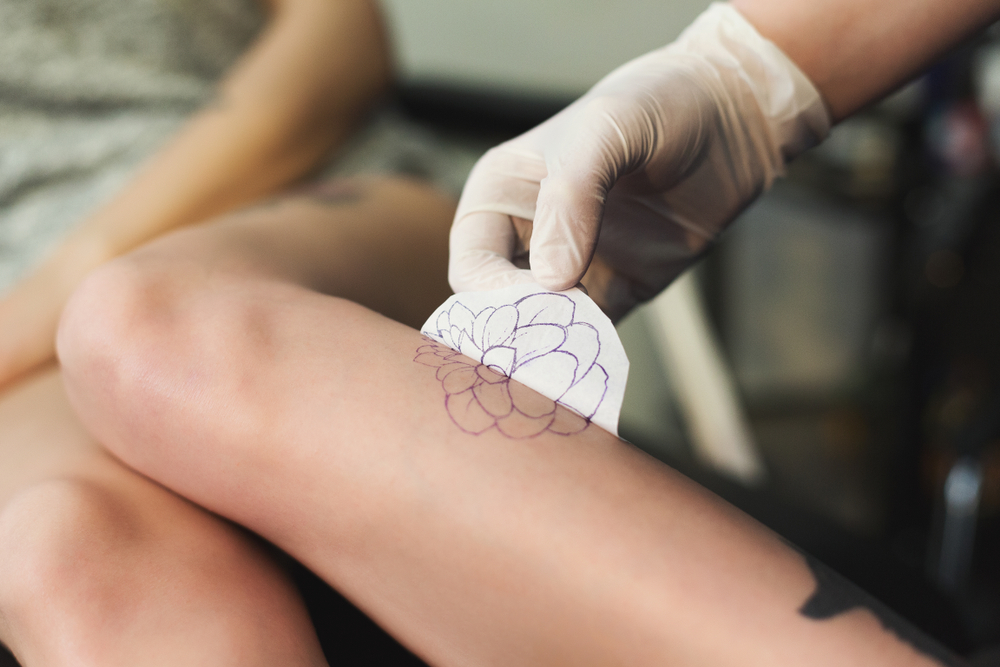
Stencil precision: Botanical stencils require attention to the spacing and flow of individual elements. Transfer your stencil carefully and check that curves read naturally on the body surface before beginning. Small misalignments in a botanical stencil become pronounced once the piece is completed.
The Most Popular Fine Line Botanical Subjects
Understanding what subjects drive demand helps you focus your practice and portfolio development:
• Roses (both open and bud forms, wildly popular and technically rewarding) • Peonies (complex, layered petals that showcase fine shading skill) • Lavender and eucalyptus (popular Australian choices with strong cultural resonance) • Native Australian wildflowers — waratah, bottlebrush, banksia (a genuine gap in many portfolios) • Lotus (popular in spiritual and memorial contexts) • Wildflower clusters (mixed botanical compositions)
Developing your own signature approach to these popular subjects — a particular way of rendering roses, or a distinctive handling of Australian botanicals — is how you differentiate yourself in a style where many artists are working with similar subject matter.
Building a Botanical Fine Line Portfolio
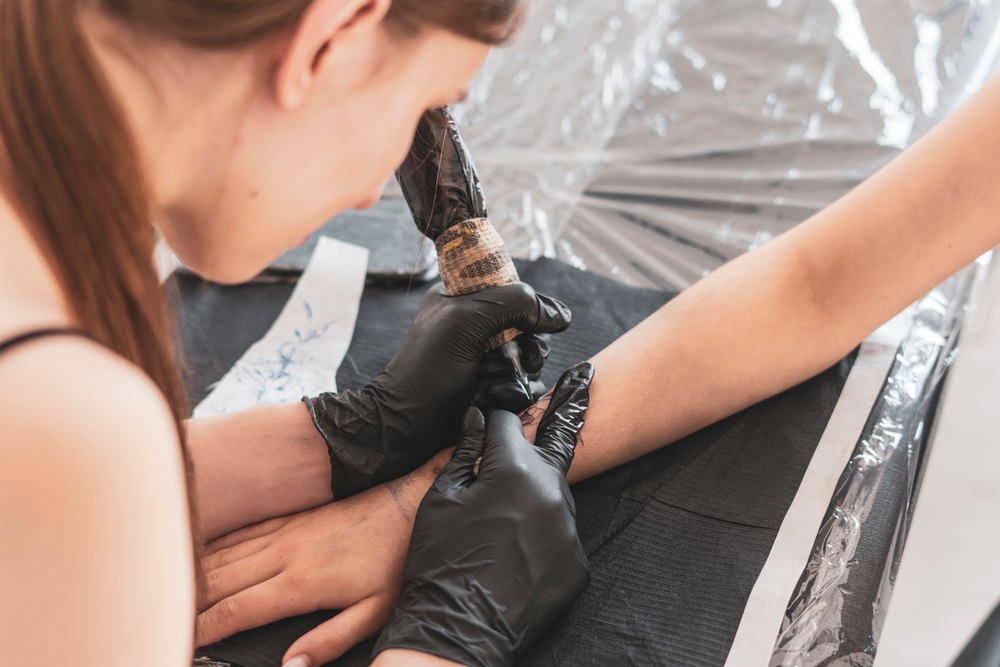
Because botanical work is so popular, potential clients doing research will see many examples of it. Your portfolio needs to demonstrate more than competence — it needs to show a clear aesthetic point of view.
Consider developing a cohesive suite of practice botanical pieces that demonstrate your full range: clean outline-only work, pieces with subtle shading, compositions of different scales, different subject types. Photograph them consistently — same lighting, same background — so the portfolio reads as unified and intentional.