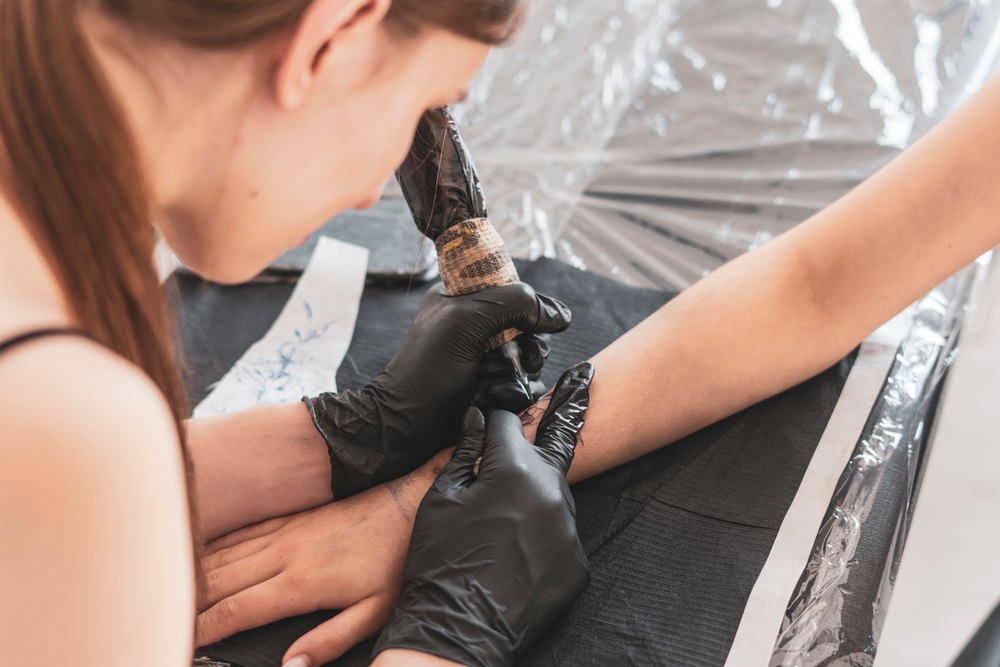
When you decide to pursue formal tattoo training, you face a choice that wasn’t available a decade ago: study in person at a school or studio, or study online through a self-paced programme. Both pathways lead to the same goal — professional-standard tattooing ability — but they get there differently.
This comparison covers the five dimensions that matter most when choosing your training pathway: cost, flexibility, instruction quality, accountability structure, and outcomes.

Cost
Online courses: Online tattoo courses typically range from $2,000–$5,000 for comprehensive programmes, including equipment. Payment plans are common — at Omnia, you can access course content from as little as $30 per week. There are no travel costs, no accommodation costs, and no lost earnings from commuting to and from a physical location.
In-person tattoo schools: Formal in-person tattoo school programmes in Australia and internationally range from $5,000 to $20,000+ depending on duration, location, and curriculum scope. This figure doesn’t account for the opportunity cost of blocked study time, or travel and accommodation expenses if the school isn’t local.
Cost advantage: online. Significantly so for the majority of students.
Flexibility
Online courses: Study any time, anywhere. No fixed schedule to keep. Self-paced means you progress at the rate that suits your life — whether that’s a full weekend immersion or 90 minutes every evening after work. For students with jobs, families, or irregular schedules, this isn’t just convenient: it’s the only viable option for getting quality training.
In-person schools: Fixed schedules, fixed locations. You need to be physically present on the days and times the programme runs. For students with significant existing commitments, this is the primary barrier to entry. For students who are fully available and benefit from externally imposed structure, the fixed schedule can be an advantage.
Flexibility advantage: online, clearly.

Quality of Instruction
This is where the comparison gets more nuanced — and where many people’s assumptions about online training are most off-target.
The quality of instruction in any training programme depends on the quality of the instructors, not the delivery format. An online course taught by mediocre practitioners is worse than an in-person programme with world-class instructors — and vice versa.
The best online tattoo courses in Australia are designed and delivered by working professionals with established careers and extensive teaching experience. When the curriculum includes structured feedback on submitted practical work — not just passive video content — the quality of instruction can match or exceed what’s available in many physical schools.
The key question to ask isn’t ‘is it online?’ but ‘who is teaching it and how do they deliver feedback on my practical work?’
Omnia’s advantage: Our courses are taught by Luke Dyson and Kat — working professionals with 14+ years and established specialist careers. Tutor feedback on student practice submissions is available six days a week throughout the programme.
Accountability Structure
Online courses: Self-paced means self-directed. For students who thrive with autonomy, this is an asset. For students who need external deadlines and peer pressure to stay on track, it’s a genuine challenge. The students who struggle in online programmes are almost always those who wait for external motivation rather than building internal study habits.
In-person schools: Physical attendance creates built-in accountability — you’ve paid for the day, you’re expected to be there, and your absence is visible. For some students, this structure is exactly what they need to stay consistent.
Honest recommendation: if you know from previous study experience that you struggle without external accountability, address this before enrolling online — not by choosing a less suitable training format, but by building explicit accountability structures: a study schedule, a practice partner, or regular check-ins with your tutor.
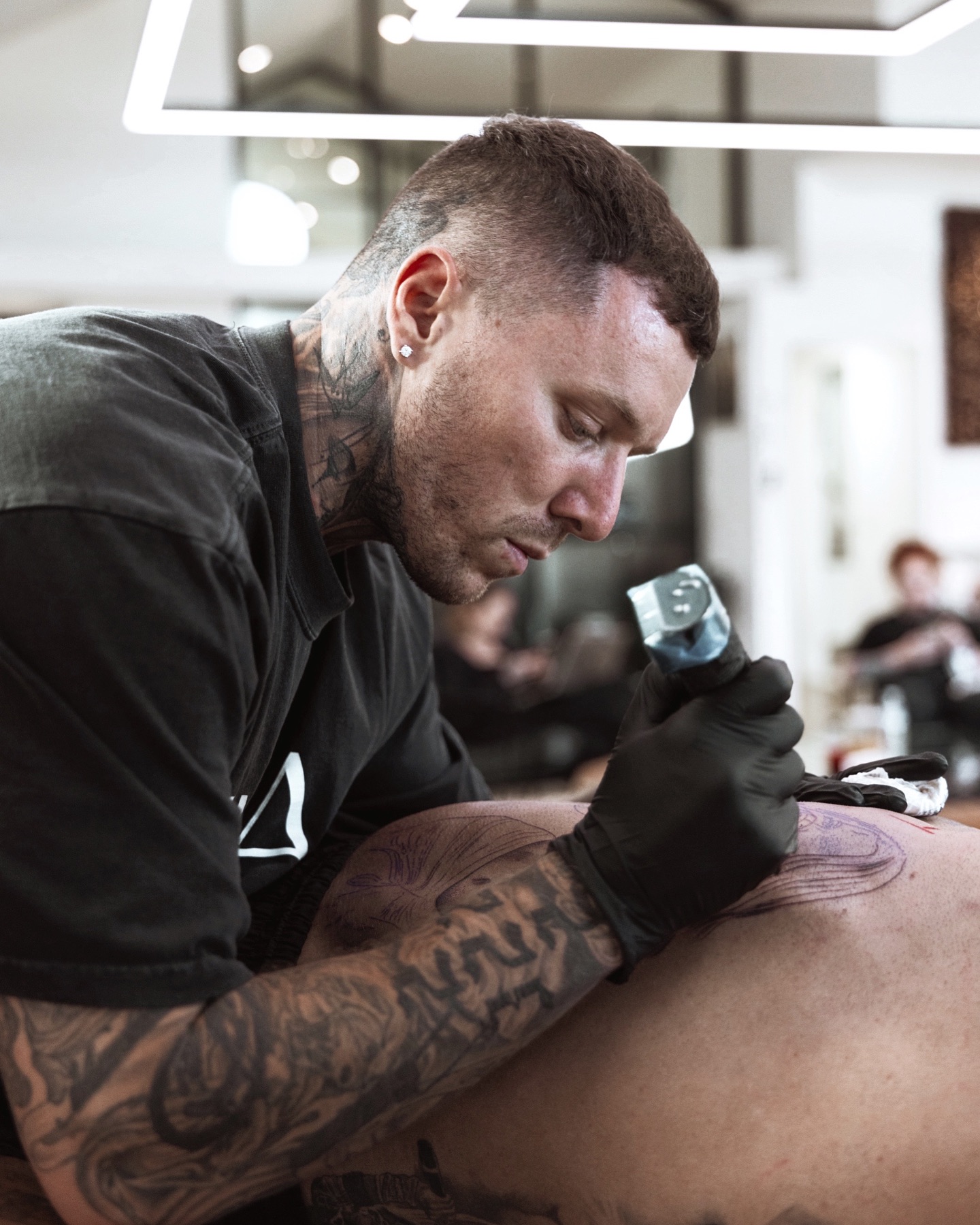
Outcomes: Which Produces Better Artists?
The proof point is always graduate outcomes — and the honest answer is that both formats produce excellent artists and mediocre artists, depending on the student’s commitment and the programme’s quality.
Online tattoo graduates are working professionally across Australia. Many have built strong social media followings and profitable practices within 12–18 months of completing their training. The format doesn’t limit outcomes — the student’s application and the programme’s quality determine them.
What does matter is the practical component. Any online training programme that doesn’t include structured hands-on practice, submitted work, and professional feedback is incomplete. Look for this specifically when evaluating online programmes — passive video consumption alone is not sufficient training.