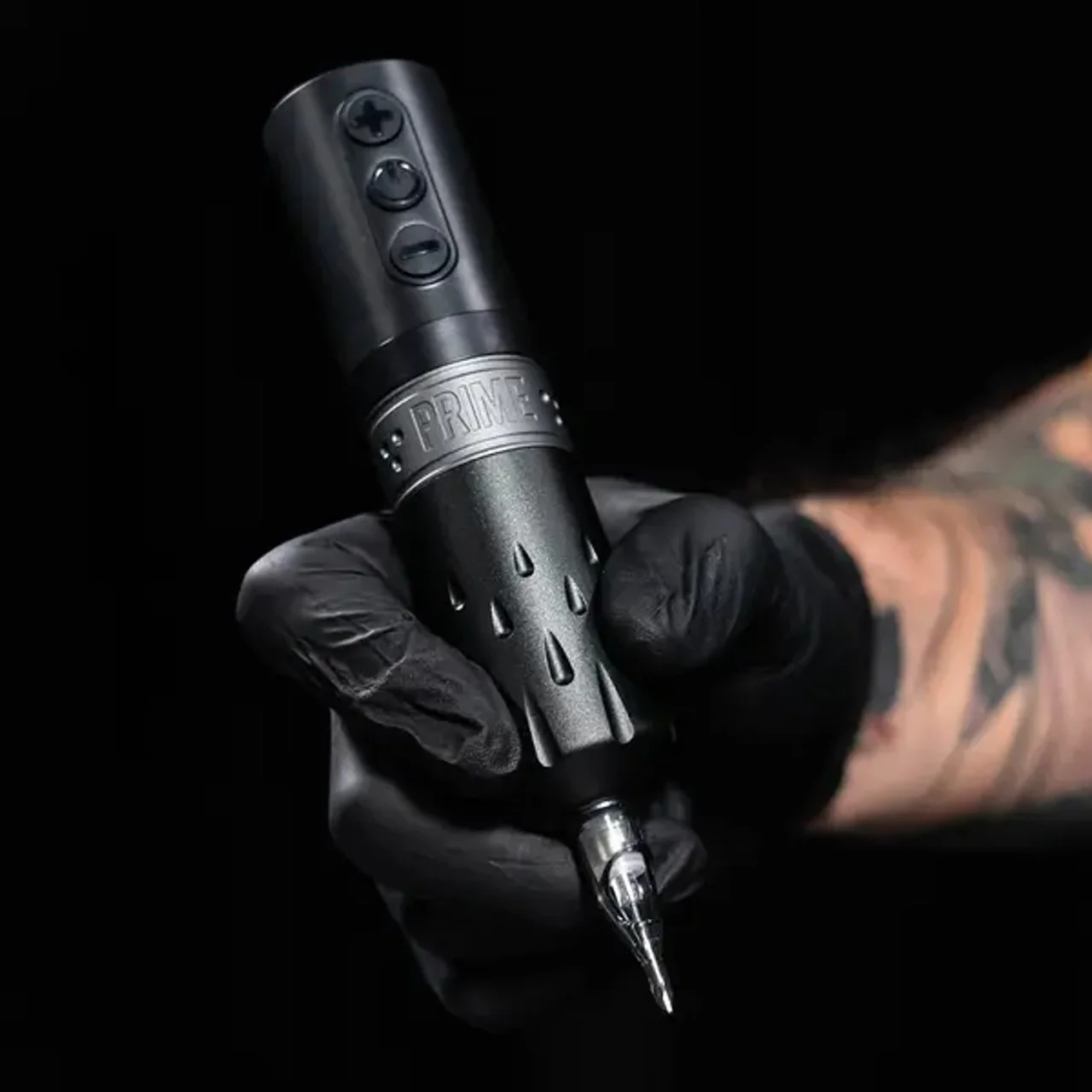
Ask a fine line tattoo artist what separates their best work from their early attempts, and needle selection almost always comes up. The correct needle configuration for the job is one of the most controllable factors in fine line outcomes — and understanding it makes the difference between crisp, clean lines that heal well and inconsistent work that leaves you puzzled.
This guide covers needle configurations, cartridge selection, and practical guidance on when to use each type for fine line work.
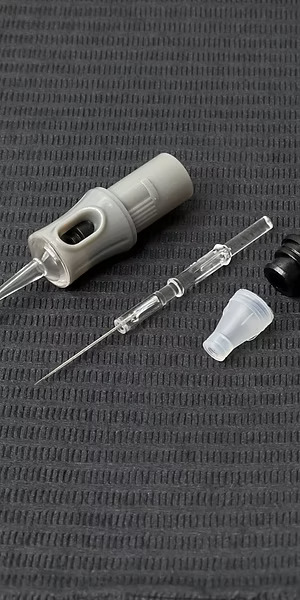
Understanding Needle Notation
Tattoo needles are described by two numbers: the diameter of each individual needle, and the number and configuration of needles in the grouping.
The most common needle diameter for fine line work is #10 (0.30mm), sometimes called ‘standard’ gauge. Fine line artists increasingly use #12 (0.35mm) for their liner work — a common misconception is that finer needles always equal finer lines, but #12 liners in a tight grouping can actually produce cleaner lines than a single #10 depending on machine settings and technique.
The configuration describes the grouping pattern: round liners (RL) are needles soldered in a circular cluster, used for lines and fine detail. Magnums (M or MG) are needles arranged in two rows, used for shading and fill work. Curved magnums (also called soft mags or CM) have a curved arrangement that reduces skin trauma and is preferred for soft shading in fine line work.
The Core Fine Line Needle Configurations
1RL (Single Round Liner): The signature needle of fine line tattooing. A single needle produces the thinnest possible line but requires the steadiest hand — there is no needle grouping to help average out minor speed or pressure variations. Excellent for ultra-fine botanical work, script tattooing, and micro-realism detail. Requires lower machine voltage (typically 5–6.5V) and careful speed management to avoid trauma.
3RL (3-Round Liner): Three needles in a tight round cluster. The most versatile needle in the fine line artist’s kit — it produces thin, clean lines while offering slightly more forgiveness than single needle. Ideal for botanical outlines, geometric work, and fine line portraits where some line weight is appropriate. Works beautifully at 5.5–7V depending on machine.
5RL (5-Round Liner): A slightly heavier fine line option, producing a clean, definite line suitable for work that needs a touch more presence — script tattooing at larger sizes, outline work in fine line realism, and architectural or geometric designs where line weight matters for structure.
7RL and above: Once you move into 7RL territory, you’re typically at the boundary between fine line and general line work. These configurations are still used by some fine line artists for outline contrast in larger compositions, but aren’t suited to delicate or intricate fine line detail.
Shading Needles for Fine Line Work
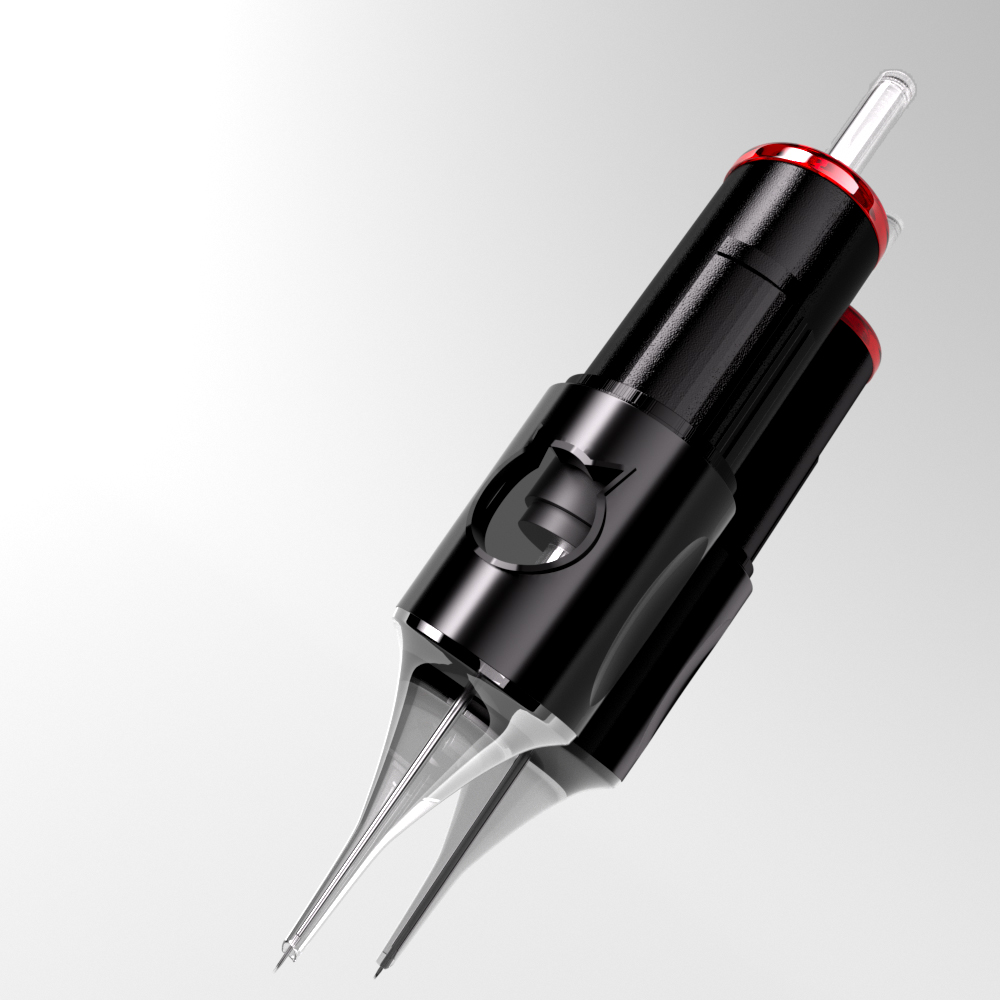
5CM / 7CM (Curved Magnum): The go-to shading needle for fine line artists. The curved arrangement allows a smooth rocking motion across the skin, producing gradual ink deposits that create soft, photographic shading quality. For fine line portraiture and botanical shading, a 5CM or 7CM is the standard choice.
3CM / 5CM for fine detail shading: Smaller curved magnums allow more controlled shading in tight spaces — between petals, within facial features, in small text serifs. They sacrifice some smoothness for control, which is the right trade-off for intricate work.
Avoid flat shaders for fine line shading: Flat magnums deposit ink more heavily and with harder edges than curved configurations. They’re suited to packing solid colour and traditional-style fills, not the soft gradient work that defines fine line aesthetics.
Cartridge Quality: What to Look For
Cartridges vary significantly in quality, and in fine line work, quality matters more than in bold styles because the margin for error is smaller. What distinguishes a high-quality cartridge:
Membrane integrity: The membrane prevents ink from travelling back into the machine. A poor membrane results in ink backflow, which causes inconsistent needle performance and machine contamination. Test: press the cartridge plunger — it should have consistent resistance throughout the range of motion.
Needle solder consistency: Needles should be evenly soldered with no visible misalignment. Misaligned needles produce uneven lines and skin trauma. Visual inspection before use is a good habit.
Taper consistency: The taper (the pointed end of the needle) directly affects how the needle enters skin. Long-taper needles are preferred for fine line work because they enter skin more gently, reducing trauma and producing cleaner, crisper lines than short-taper equivalents.
Reputable brands — those used by professional artists and sold through established tattoo supply companies — meet consistent quality standards. Purchasing the cheapest available cartridges, particularly from unverified online sources, is a false economy in fine line work.
Voltage and Speed: How They Interact with Needle Choice
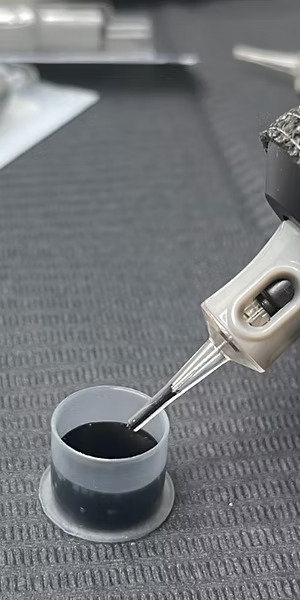
Needle selection isn’t made in isolation — it interacts with your machine voltage and tattooing speed.
General principles for fine line:
• Lower voltage (5–7V) for liner work — maintains control and reduces skin trauma
• Consistent, steady tattooing speed — slower for more ink deposit, faster for less
• Test your needle on synthetic skin before use on a client to confirm the combination of voltage, speed, and needle is producing the result you want
• Change cartridges mid-session if you notice any degradation in line quality — needles blunt over extended use